


If you hadn’t noticed, the Batman Begins show is back this season. That’s what Arrow started out as, with a side helping of soap opera family and relationship drama, but things got seriously wonky in the second season, seemingly to the extreme delight of the many and dismay of the vocal few. Now, season 3 is pulling back on season 2’s craziness, returning to Oliver battling a series of more reality-based foes. They are using Sara’s death to push the story forward but not so fast that they can’t stop to focus on Thea for an episode or Felicity for another. “Guilty” put its focus on Laurel and Roy, giving us yet another false lead in “Who Killed Sara Lance?” mystery. It’s still early, of course, and Arrow won’t be able to keep this up, not with it sharing a fictional universe with The Flash and its endless supply of meta-humans. However, I appreciate the effort to perhaps course-correct even if a great many fans don’t think there was anything which required correction.
The strange thing, though, is that I can’t seem to give into the new season’s charms. I read other reviewers who will praise an episode’s attributes while acknowledging but seriously downplaying plots holes, bad writing, questionable acting, and I appreciate the optimism. However, all of those bad parts are the things that jump out at me the most when I watch Arrow now. My thought process when I watch Arrow plays out like a series of questions and rationalizations, as if I’m ready to pounce on the mistakes but too nice to leave it at that. So, for “Guilty,” an episode I didn’t particularly enjoy despite some admirable character development for Laurel, I am not going to write a traditional review. Instead, I’m going to walk through the random questions I had and eventual rationalizations I reached while watching the episode, presented below like an interview with the questions in bold print and the rationalizations in normal print:
Is it bad that I laughed out loud when one of the cliffhangers before a commercial break was Ted Grant’s announcement that he used to be a vigilante? Like that’s a totally normal thing. Oliver being a vigilante and inspiring others to follow him I can accept, but some boxer who has nothing to do with Oliver turns out to have gone out years ago to deliver vigilante justice with his fists? That’s just harder to accept.
It’s not like Oliver Queen invented vigilantism. Someone could have put on a mask and brass knuckles and gone out and beat people up all on their own. Sure, it’s odd that no one on Team Arrow has ever heard stories of any kind of vigilante attempting to clean up The Glades (and Starling City) years before Malcolm Merlyn made it go ka-boom, but maybe that just means Wildcat and apprentice were better at flying under the radar than Team Arrow. Plus, comic book canon and blah blah blah. Note to self: go to Wikipedia to brush up on Wildcat from the comics.
Seriously, Oliver? You’re really going with “Ted once killed a man and is therefore never to be trusted by anyone ever again.” That’s your play here?
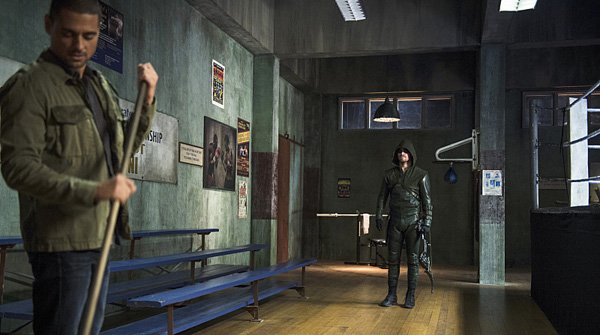
Oliver Queen can be a bit of a jerk. He is consistently hypocritical. This is nothing new. His high and mighty stance on Ted is supposed to relate to Team Arrow’s concurrent moral dilemma over what to do with Roy if he actually killed Sara. Diggle argues they can’t have different sets of rules of justice, one for the heroes and one for the bad guys, yet Oliver is being judge and jury for Ted and patient defense attorney for Roy. Plus, Oliver’s reaction to Ted isn’t really about all that. It’s more about male ego (Oliver boasting that his Batcave is bigger than Ted’s), misplaced anger and frustration that Laurel has sought out training on her own, and a knee-jerk impulse to control Laurel to ensure her safety, jumping to easy conclusions about Ted because it means removing a potential threat to Laurel’s wellbeing.
Oh, come on! Oliver ratted Ted out to the cops, and then when Laurel confronted him about it he puffed out his chest, raised his voice to defend himself before quietly acknowledging that, yeah, Ted’s totally innocent. I’m supposed to like Oliver, right? Why is this episode making that so hard?
See the above answer: Oliver is often a jerk and a hypocrite. He is a flawed dude, in this case proving himself unwilling to even actually apologize to Laurel for getting her friend unjustly thrown in jail. Maybe I’m just more annoyed by Oliver’s behavior this season because Barry Allen over on The Flash is so much more likable, providing a stark contrast to broody Ollie.
Since when can Felicity test blood, create fancy virtual MRI’s of corpses, and derive authoritative forensics conclusions (or lack thereof) based upon her analysis of the evidence? I thought she was just a computer hacker.
 The TV nerd is an adaptable one with a skill set and level of knowledge wholly flexible to the whims of the writers. Angel’s fifth season gave its resident nerdgirl Fred, a physicist, a whole new range of medical skills we had no reason to believe she possessed, but you just went with it because it’s just a TV show. Plus, it’s not like they were suddenly having her perform surgeries or anything too extreme. In this case, Felicity jokes that she only knows a little, and the truly dangerous part is her with a syringe. This is also not the first time we’ve seen Felicity be a little more than computer hacker as pretty much everyone on the team has some basic nursing skills at this point. You’re nitpicking.
Roy was going to turn himself in for Sara’s murder, but no one knows she’s dead. How is Roy going to explain any of this to the cops, particularly the part about where Sara’s body is buried?
None of those details matter. What matters is that Roy did the stand-up thing and came clean to the rest of the team about what he did, consequences be damned. This is the same guy who existed in a land of perpetual secrets last season, and here he was not even waiting one full episode to fess up.
Oliver actually knew the whole the time that Roy was simply recovering his memory about killing the cop. So, by letting Roy run free after his confession to the team wasn’t he risking that Roy would simply turn himself into the police for the wrong crime?
Yeah, um, shut up about that. Oliver told Roy not to turn himself in, and Roy clearly follows orders. You’re nitpicking again.
Is Roy an interesting character yet? Because try as I might I just don’t really care about him.
Hey, that’s your issue. They’ve held him back purposefully this season and given him a moral crisis in this episode only to tease continued drama for him in the short term as he deals with the “I killed a man!” fallout. So, they are finally giving him something to do, even if Colton Haynes suitability to the material is forever up in the air. Plus, you like Oliver, right? Right? Roy is an extension of Oliver, and after totally dropping the ball on that last season they are trying to re-focus on the mentor-mentee relationship between Oliver and Roy this year.
Did they seriously have Laurel walk out the side of the police station with Ted Grant with no indication whatsoever as to how exactly she got him freed of the 17 cases of homicide he was facing? No alibi, no “Laurel uses D.A. powers to blackmail someone” moment, nothing. He just convinced Laurel he was innocent, and, poof, he was free to go. Am I just supposed to let that go?
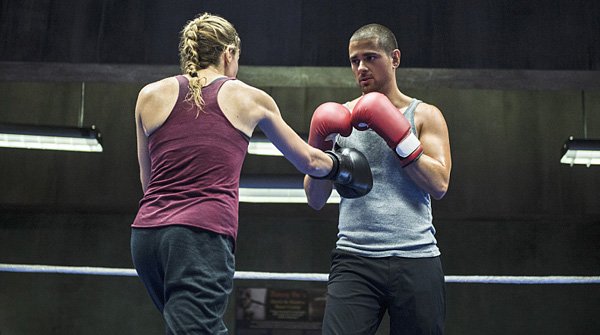 Yes, you are. It’s a stupid moment, but it only takes up a minute of screen time. They needed to get Laurel and Ted into that car with his homicidal ex-apprentice as quickly as possible, and actually bothering with how Laurel got Ted out of that legal bind was going to take too long. Plus, at this point the incompetence of the Starling City Police Department seems equal to the corruption of the Gotham City Police Department on Gotham. So, maybe Laurel just threw a spare set of keys across the room, and rushed Ted out the side door while all of SCPD’s finest investigated the shiny metal object that magically appeared on the other side of the room. I’m sure at some point during that poor Quentin reached for his heart pills and thought of how much he loves his still alive daughter Sara.
Isn’t it just a little bit too convenient that at the exact same time Oliver is contemplating cutting his sidekick loose he encounters a retired vigilante who did just that with his own sidekick only to have that poor bastard return with a righteous vengeance?
Well, yeah, but that’s how TV shows work a lot of the time. Storylines with guest actors improbably mirror the exact same set of emotions or circumstance our main characters are facing at that moment in the season. It’s just dramatic symmetry, often times used as a way to get our main characters to make some important decision or open up about their emotions. Even so, geese, this was pretty darn heavy-handed. Heck, Roy probably would have died there at the end if his attacker hadn’t stupidly stopped to spell everything out for us, e.g., “He’ll abandon you too! You’re nothing to him but a weapon to use in his arsenal!”
Seriously? They recover memories by simply sitting around a candle and speaking in hushed tones? Plus, was it actually a tad offensive when the concept was introduced in the flashbacks via the Japanese sidekick from The Wolverine and heavy-handed oriental music played in the background?
What do you actually know about memory retrieval techniques, huh? For all you know, what they presented was totally valid. In fact, I bet if you Google “Memory Recovering Candle” you’ll probably get something [Leaving to Google that now] Okay, it turns out there are absolutely zero Google results for that exact phrase. However, it does take you to a Wikipedia page for “Recovered memory therapy” which states that there are “several controversial and/or unproven interviewing techniques, such as hypnosis and guided-imagery, and the use of sedative-hypnotic drugs” which are used for the purpose of recalling memories. So, that candle must have had some drug in it or something. I bet they mentioned that and you just didn’t notice [Leaving to Re-watch the scene in question in “Guilty”] Okay, it turns out there’s absolutely no reference to any kind of drug, and you probably couldn’t really call what they did guided-imagery. But, hey, you’re still no expert. A writer was paid good money to come up with that idea and write that scene. They probably did a little research or were referencing some movie or comic book you don’t know about. Then again, sometimes a stupid scene is just, well, you know.
THE BOTTOM LINE
When I look at all of “Guilty”s perceived sins and try to rationally think my way through it I come out of with an episode that appeared to do a lot right. It finally gave Roy something to do, saw Laurel seizing more agency in her life and not cow-towing to Oliver’s patronizing efforts to protect her, and, well, I’ve run out of nice things. However, my actual experience of watching the episode was of pretty consistent eye-rolling and failed efforts to truly care about Roy Harper. Regardless of how admirable it was, whatever they were trying to do with this episode just didn’t really hang together very well, at least not for me. Part of that might simply be on me and my preference to actually like my lead characters, and I didn’t particularly like Oliver Queen for most of “Guilty.” However, when an episode begins by literally spelling out its central theme (guilt) on the floor beneath upturned dead bodies you should probably adjust your expectations accordingly. Maybe I just never did.
THE NOTES:
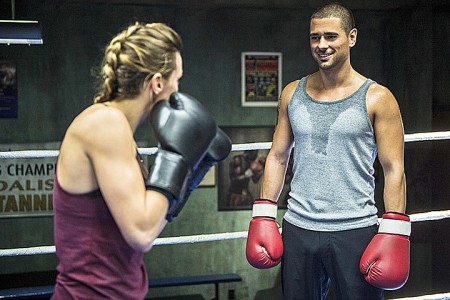 1. Did you see Katie Cassidy’s arms during her boxing match at the beginning of the episode? Those are good arms to have.
2. How many of you had totally forgotten that Roy killed that cop last season?
3. I noticed that redhead in the background immediately, and though I’d yet to see any pictures of Amy Gumenick as next week’s villain Cupid that’s who I assumed it was because I knew this season was going to have a female villain who’s stalking Arrow. However, if you didn’t know any of that I’d be curious if you noticed Gumenick in her two background cameos before her surprise arrival at the end of the episode.
4. Several times during this episode there were act breaks or scene transitions that were supposed to seem dramatic yet didn’t really pack as much of an oomph as needed. The first one that comes to mind is the moment at the end of the flashbacks when Katana announced that Oliver could repay her efforts by getting out of their lives as soon as possible. “Thanks, Katana. That’s pretty much exactly what we’ve been planning to do anyway.”
5. Laurel has Felicity on her cell phone’s Direct Dial folder. Good to know.
6. I hope that “Guilty” is the last time we ever have to hear the word Mirakuru.
7. If you haven’t read Marc Guggenheim’s interview with TVLine, here’s the link. He reveals some spoilers for the next couple of episodes and a little further down the road.
8. If you haven’t seen it yet, here’s what Laurel’s Black Canary costume looks like.
 NEXT TIME:
SECOND OPINIONS:
ScreenCrush.com – “Overall, there was enough to enjoy amid the entirety of “Guilty,” with some intriguing developments on Ted Grant’s dynamic with both Laurel and Oliver, and a renewed bit of focus on Roy’s emotional investment in the crusade. Introducing Grant’s former protégé and tying their strained relationship to Roy, Oliver, and Laurel’s respective arcs took place just a bit too quickly to resonate, but certainly explored some larger questions about the show’s sense of vigilante justice, and deepened the multiple mentor-partner dynamics we’ve seen forming this year.”
TV.com – “Guilty” was a very good episode for [Laurel], and in no small part because she’s rejecting pretty much everyone’s attempts to keep in her a little box where she’ll be safe and protected. She’s reacting to things in an assertive, self-propelled manner, as opposed to a passive, self-destructive one
I’m done with my ramble. What about you?
 We Minored in Film
Great review! Thank you! Actually, reading it entertained me more than watching the episode itself. Please, do more ARROW reviews in this Q&A-format – this is extremely insightful! I’d like to add one more question. Maybe you have yet another smart rationalization for it :D! What happened to Diggle? Did he lose his mind? He “tells Ollie that Roy has to pay, if he killed Sara, because when it comes to ethics ‘We can’t have two sets of rules’. He says this while his wife draws a paycheck from an organization that nearly killed 500,000 people last year [ARGUS], and while behind him, a woman [Felicity] has just broken into the police database” (from the io9 review). Furthermore, he says this KNOWING that Roy DID kill somebody in a Mirakuru rage- though it was “only” an anonymous cop. Sooo, Ollie should abandon Roy anyway, shouldn’t he? Because everybody must be treated according to the rules, right? Unless one’s name is “Oliver Queen”. (Or “John Diggle”, for that matter. Didn’t he kill people in his past, too? I mean, in Afghanistan?) – BTW, regarding your comment “I hope that ‘Guilty’ is the last time we ever have to hear the word Mirakuru”, it seems that your wish comes true. Last night, Stephen Amell confirmed on the “Arrow After Show” with John Campea that the Show is done with Mirakuru (at least for the time being… because there is a rule that has now been reinstated on Arrow: No superpowers!)
I’m glad you liked the review. My most recent review was done largely in a pros/cons style, and this Q&A format was kind of a conversation with myself briefly getting at not just my issues with the episode but also whether or not I even like Arrow anymore.
As for Diggle, I have to be honest – At some point, I looked down at my review’s word count and saw it was over 2,300 words, a total I try not to exceed too often since most other Arrow reviews at other sites are more in the 1,000 – 1,500 word range. The only thing I hadn’t written about in my review yet was Diggle’s totally out-of-character moment, but I just had to stop somewhere. Both you and io9 covered the topic beautifully. There is no good rationalization for that moment because it just doesn’t really work for that specific character. However, from the point of view of whoever actually wrote the episode it’s probably less about who said those words (“We can have to sets of rules, one for them, one for us”) and more about the fact that those words needed to be said by somebody during the episode to spell out the ethical conflict Oliver was facing. Diggle just happened to kind of be there, and he’s been the one to stand up to Oliver on this type of thing in the past.
“it seems that your wish comes true. Last night, Stephen Amell confirmed on the “Arrow After Show” with John Campea that the Show is done with Mirakuru (at least for the time being… because there is a rule that has now been reinstated on Arrow: No superpowers!)”
That’s both good and bad. Good, because Mirakuru was a stupid word they should never say again and also because superpowers just don’t really make sense in the universe Arrow had established. Bad, because, well, you can’t put that genie back in the bottle. This is now a universe with superpowers. Plus, they can’t really take Arrow completely back to its Batman Begins roots, not when it now shares a universe with The Flash, which has had a superpowered villain in all but one of its episodes. That’d be like the Christopher Nolan Dark Knight trilogy sharing a cinematic universe with a series of Superman films it ran concurrent to. However, I appreciate the effort on Arrow’s part, and there’s an argument to be made that with Flash being so thoroughly comic book-y that Arrow is better off having an alternate identity. The Flash is the fun, comic book one, and Arrow is the darker, more reality-based one, and every now again they’ll cross over, delighting as their two opposite worlds collide.
This was worst episode so far, for me, mostly bc of Roy, that guy can not act imho.
“This was worst episode so far”
Agreed. It was easily the worst episode of the season.
This is an episode I’ll never watch again.
The minor points:
If you thought Brother Eye wasn’t a good villain, wait till you meet this episode’s one, completely ordinary and so barely there, I didn’t even get his name. His whole purpose was to tell Roy that Oliver would abandon him because he was only part of his Arsenal (nudge, nudge).
Diggle was very out of character to further this week’s plot. I thought the military stand was you never leave a brother behind, not you ditch someone who may have been hurt by being in the war with you.
Oliver did not get Ted Grant thrown in jail. The police did show up at the gym and arrest Grant but there was nothing to indicate that Oliver told them he was there since at that point he believed Grant was innocent. That was Laurel’s hysteria talking..
I guiess tech actors cost more than other actors. Inevitably, from NCIS to Criminal Minds to CSI, if you can work a computer, you can do everything lab related. Although to be fair, Sara probably taught Felicity to do blood analysis since she did it, presumably learning from having worked with Ivo for a year. Too bad they couldn’t use the police crime investigators since Laurel decided not to tell her father about Sara’s death.
The three most boring things to watch on TV are: 1. real psychotherapy, which takes years; 2. computer programming/hacking, which can take hours, and 3. hypnotic induction, which takes about 15 – 20 minutes with a newbie. I’m fine with the show choosing to fastforward those last two. Do you really want to spend 20 minutes watching Felicity hack into a database or Oliver take Roy through a full induction? (I do hypnosis professionally and I was fine with the candle short-cut.)
Oliver is controlling and he can be a hypocrite, and it’s Laurel’s right to take vigilante lessons if she wants to. On the other hand, she’s been making mostly bad decisions since Sara died (like trying to shoot Komodo, going after a guy she doesn’t know with a baseball bat or accusing Oliver of turning Ted Grant into the police) and it’s been up to Oliver and Quentin to clean up her messes. So maybe he does have some right to input because he cares about her and doesn’t want to see her beat up again.
Laurel told Ted she used to date the Arrow. Laurel has dated three men, and two of them are dead. Not hard to find out who the Arrow is from that.
Except for a couple of scenes with the Arrow in the premier, all Quentin has done this season is scenes with Laurel. Poor guy, he’s really boxed in (pun unintended but appropriate).
The major problem:
I think this season the writers have figured out Colton Haynes strengths and are writing to them. But it didn’t work in this episode, and I think it was because they relegated him to the ‘B’ story while the ‘A’ one was about Laurel and Ted Grant. In this episode, which was supposedly to further Roy’s story and the tie to Oliver’s origin story and mentorship, Roy got a total of 2:10 minutes with Felicity, 3:34 with Oliver. and just enough time for the villain, whatever his name is, to drop the anvil. The rest of the episode was Laurel’s story with Ted Grant. Even if you don’t find Roy charismatic, less than six minutes is not nearly enough time to be able to care about his story. Roy got even less time in Corto Maltese, which was about Thea/Malcolm and Laurel going after a guy with a baseball bat and getting beaten up herself.
Maybe it isn’t possible to combine Laurel’s origin story in episodes with Team Arrow, maybe it is and these writers can’t do it. But what they are doing isn’t working for me because it’s short-changing all of Team Arrow.
With respect to Laurel’s BC costume, she will appear in it mid-January, three months after she started boxing lessons with Ted Grant. It took Oliver five years, Sara six when we first saw her, and even with Mirakuru, it’s taken Roy eight months and he knew parkour and fighting skills before. Compared to Laurel suiting up in 3 months, the “Memory Recovering Candle” doesn’t seem so ridiculous. Spoilers and interviews suggest that Oliver goes missing in the mid-season finale and the January and early February episodes are about Laurel suiting up and whatever Ray is planning. It seems very risky to me because those are the aspects of the show that don’t interest me and without Oliver/Arrow, it’s a big temptation for find something else to watch.
I hope you don’t mind my linking a review here. This brings up a number of points that the episode could have done with Roy, if it were about Roy.
http://sequart.org/magazine/52242/tv-arrow-306-review/
No problem with you including the link. That particular reviewer breaks it down pretty perfectly. Isaac being so underdeveloped does pretty completely undercut how effective the stuff Ted Grant could ever be, and Roy’s drama was poorly handled for sure.
“This is an episode I’ll never watch again.”
Same here.
“Diggle was very out of character to further this week’s plot. I thought the military stand was you never leave a brother behind, not you ditch someone who may have been hurt by being in the war with you.”
Diggle behaved that way because the writers needed a show to argue that extreme viewpoint, not because it actually made sense for Diggle to be the done doing so. They dropped the ball.
“Oliver did not get Ted Grant thrown in jail. The police did show up at the gym and arrest Grant but there was nothing to indicate that Oliver told them he was there since at that point he believed Grant was innocent.”
You could argue that there’s nothing to suggest that Oliver didn’t call the cops. He never denies Laurel’s claim, briefly explaining why he thought Ted was guilty before admitting his encounter with Ted and the other guy made him realize he was wrong. However, the cops could have just shown up based on the breadcrumbs left by the guy attempting to frame Ted.
“Inevitably, from NCIS to Criminal Minds to CSI, if you can work a computer, you can do everything lab related”
Oh, yeah. I even called myself out on this in my review, saying I was nitpicking. It’s a convention of TV shows at this point. I was more openly wondering when exactly Felicity’s lab capabilities expanded. It feels like it happened gradually enough that I didn’t notice.
“Do you really want to spend 20 minutes watching Felicity hack into a database or Oliver take Roy through a full induction? (I do hypnosis professionally and I was fine with the candle short-cut.)”
If your saying that in your professional opinion the candle scene was fine, just a standard example of Hollywood condensing a real thing, then that’s cool. Like I said in the review, I am no expert.
“Laurel told Ted she used to date the Arrow. Laurel has dated three men, and two of them are dead. Not hard to find out who the Arrow is from that.”
Everyone seems to have noticed that error on the show’s part. So, one wonders how long it will be before Ted figures it out.
“Even if you don’t find Roy charismatic, less than six minutes is not nearly enough time to be able to care about his story.”
You’re not wrong.
“Maybe it isn’t possible to combine Laurel’s origin story in episodes with Team Arrow, maybe it is and these writers can’t do it. But what they are doing isn’t working for me because it’s short-changing all of Team Arrow.”
The good thing is that that at least for a couple of episodes they’ve figured that out and removed Laurel from the equation.
“Spoilers and interviews suggest that Oliver goes missing in the mid-season finale and the January and early February episodes are about Laurel suiting up and whatever Ray is planning. It seems very risky to me because those are the aspects of the show that don’t interest me and without Oliver/Arrow, it’s a big temptation for find something else to watch.”
If that’s true then Arrow may become very tough to watch for a while, even more so than it has been lately.