


The first time I saw Selma director Ava DuVernay’s name was in a list Forbes’ Scott Mendelson made of potential directors for Warner Bros.’ solo Wonder Woman film once word got out that the studio intended to make it the first big budget comic book movie to be directed by a woman since Lexi Alexander’s Punisher: War Zone (2008). At this point, we know the gig ultimately went to Michelle MacLaren, a remarkably worthy candidate. At the time, Mendelson included DuVernay in the conversation because the buzz on Selma was insane, marking her as a director on the rise after having booked a big studio gig (Selma) off of a little-seen but beloved indie (2012’s Middle of Nowhere). Topless Robot just made a compelling argument for why Marvel Studios needs to scoop DuVernay up, regardless of whether or not it is to direct Black Panther (assuming she even cares to make a big budget movie). The non-comic book side of the film industry, on the other hand, briefly lost its shit yesterday when DuVernay was surprisingly left out of the Directors Guide of America’s nominations for Best Director, this coming one day after the Golden Globes where she had been their first black female director to be nominated for Best Director.
That’s a lot of press for a woman I still know next to nothing about. Thankfully, DuVernay was interviewed by Kim Masters for KCRW’s The Business, and, yeah, she seems kind of awesome. Here’s what I learned:
1. She started as a film publicist
 She initially pursued a career in journalism before switching to film publicity, working for multiple agencies before opening The DuVernay Agency in 1999.
“I started my own agency when I was 27, and I worked with all of the major studios and networks on campaigns where they were enlightened enough to know that the core audience wasn’t just white men. They have to reach women, or LGBT people, or black or brown. I would come in and do that work, and cross it over back into the mainstream, a lot of strategic publicity.”
2. She first realized she wanted to be a director while standing on a Michael Mann set

“I was on the set of Collateral, and we were shooting in East L.A. I had a story that I was aware of that happened just a few streets over because I’m from South Central L.A., the Comptom area. So, I almost immediately started tinkering on a script, and I became one of those many, many people with a script in a drawer.”
3. She started out making a documentary with a $10,000 budget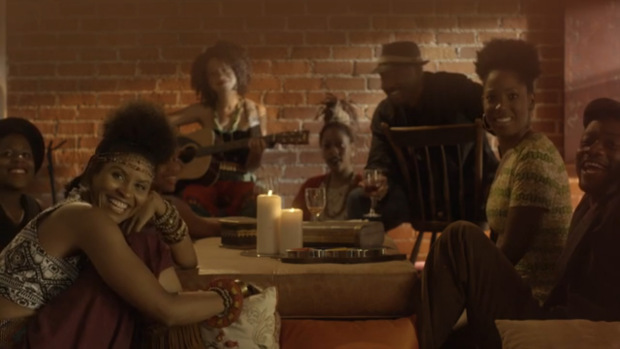
The documentary is called This Is Life, and details L.A’s. Good Arts Café movement.
“I just made it check-to-check. As I would make money from my publicity artists I would put it toward this documentary I was making about this group of artists in South Central L.A. who were doing innovative things with hip-hop and progressive movements in that area. It was a good way to pick up a camera, and figure out how to tell stories […] For me, a doc was something I could get my arms around, pay for on my own, learn the craft, and get to the end goal of a filmmaking career in a more progressive way.”
4. Her experience as a publicist opened her eyes to the necessity of finding your own way as a filmmaker
 “I’m just really allergic to dealing in a permission-based way. I think that is what the industry is. It’s all about knocking on doors, permission-begging, ‘Please can you help me? Can you do this for me? My idea is really good. Please say yes.’ That’s always a challenge for women-filmmakers, and filmmakers of color. I think being a publicist for so many years gave me an insight into some of the ways that the industry works. So, I didn’t go into it a bright-eyed, bushy-tailed filmmaker thinking everything was going to think my idea is great and will give my money. I went in with my eyes wide open, and knew that I was going to have to find my own way, as most independent filmmakers do.”
5. She’d rather tell stories her way than wait around for a studio to realize her story is worth telling

“Well, it’s just not their model. It can get personal. You can call it systemic, or say that there are racial overtones there, class overtones there, sexist overtones there. But the bottom line is that it is not their current business model. So, do you not do it? Do you not make your film? What do you? You find another model. You find another way to do it. If you’re waiting around for someone else to change their mind in order for you to speak your mind you’re going to be waiting a long time.”
6. Instead of buying a house she bought a career

DuVernay’s first dramatic film, I Will Follow, was inspired by her own experience spending two years caring for her cancer-stricken aunt in a house on the beach.
“I took $50,000 I had been saving for a house, and instead of buying a house I bought a career. I wrote a film I knew I could make for $50,000. So, all one location, a very intimate story, and that film paid off for me. I was able to self-distribute that film, do the DVD deal, do the digital deals, and get a small theatrical release through my own distribution company I had founded for my own films and other films like the ones I made focused on black life. I was able to quadruple that little bit of money, and put it into the next one [which was Middle of Nowhere, a drama about a medical student dealing with her husband’s prison sentence] . It was really just about taking a little bit of seed money, and growing it from film to film, trying to find a way where there didn’t seem like there was any way.
7. She gets her entrepreneurial spirit from her dad
“My dad [technically, her step-dad] had a small carpet and flooring company for all of my life. I would see him go out in the morning when it was still dark out, get in the truck with his name on the side, and make his own way. He never got a paycheck. I haven’t had a paycheck, an actual check paid to me with taxes taking out in almost 20 years now. Once you’re into that entrepreneurial spirit it’s hard to go another way.”
8. Spike Lee’s Woody Allen-eseque work ethic has been a huge inspiration
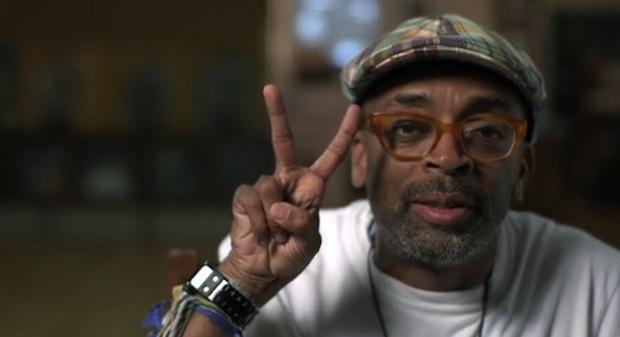 “For me, as a black woman filmmaker I just wanted to make films consistently. My goal is to make one film every year. Spike Lee was a great example of that. He made one film a year for 20 years. He made commercials, he made docs, he was just always shooting. So, I think that idea of, ‘It doesn’t have to be bigger; it just has to be consistent,’ gave me a different idea about focusing on work as a constant instead of as a ladder. By fluke, it has been a bit of a ladder, but it wasn’t by design.”
9. She wasn’t the first, second, third, fourth, or fifth choice to direct Selma
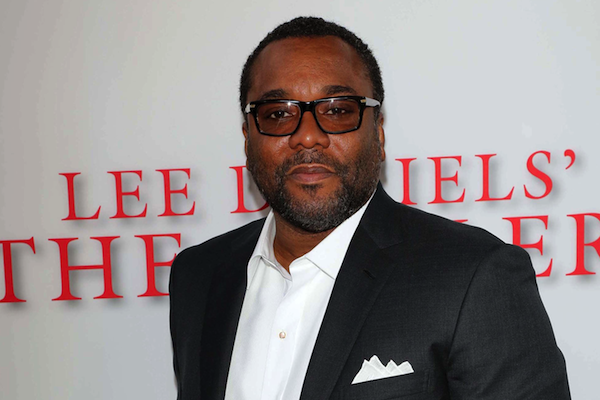
Michael Mann, Stephen Frears, Paul Haggis, Spike Daniels, and Lee Daniels were all set at one point or another to make Selma before DuVernay. However, she knew David Oyelowo from Middle of Nowhere.
“I wasn’t the first, second, third, fourth, or fifth choice for this film, but I was David Oyelowo’s choice. He was the one who was really destined to play this part. He’s the unsung hero on the business side […]David had been cast by Lee Daniels, but when Lee Daniels left to make The Butler David was an actor without a movie. He did something not a lot of actors would do when he decided he was going to try to make this movie happen himself by putting the pieces together via the producers that were already attached and bringing in some flesh blood. So, he brought me into the project, brought Oprah Winfrey into the project, and a couple of months after that we were in pre-production.”
10. None of the male members of Selma’s film crew had ever worked with a black female director before
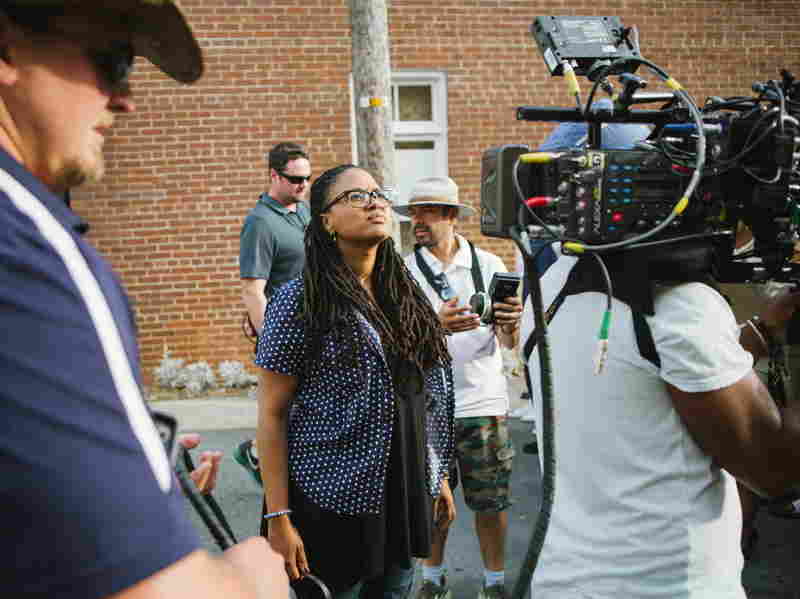
“At the start of production, I sat down with everybody, and invited them to work with me on a project I felt passionate about. It was going to be executed through my vision and the way that I work. Most of the men on my crew had never worked with a woman director before, and if they’d worked with a woman director she wasn’t black. I felt it was important to make it very clear what I expected and what I intended to have happen […] If you’ve never worked with someone or a certain kind of person you don’t know what to expect. So, I had a conversation with everyone early on to tell them what I expected.”
11. She couldn’t use any of Martin Luther King, Jr.’s actual speeches in Selma. So, she wrote new ones
 “The intellectual property wasn’t available to us. So, I just untethered myself from the words, and really tried to get underneath what he was trying to say and communicate and share. My mother was very happy because my English Lit/African American Studies double major at UCLA finally came in handy […] King was not a public person; he was a private citizen. So, all of his work was copy written. Everything we use of Lynden Johnson is based on public record because he was the President of the United States, but King was a preacher from Atlanta and his works are private […] All the rights to King’s speeches and intellectual property belong to another filmmaker. As a courtesy, we reached out to King’s family, and let them read the script in advance just so they knew what we were making. There were no changes made, and no changes asked for by them. Ms. Winfrey knows the family. So, I think that they were clear her intentions were true to the time period.”
12. She had a surprisingly great experience working with Paramount Pictures on Selma
Selma was partially produced by Brad Pitt’s company Plan B Entertainment, which has a release deal with Paramount Pictures. When Plan B’s 12 Years a Slave went to Fox Searchlight instead of Paramount lawsuits were filed because Paramount claimed it should have had the right of first refusal. The same mistake wasn’t going to made again with Selma, which is being distributed by Paramount, still an odd fit since they’re mostly known as the company that makes Transformers, Ninja Turtles, and Star Trek movies. However, it turns out they might be a little desperate to handle something a little more substantial.
“What I felt from Paramount was some real excitement there for some adult drama. My experience working with Paramount was from all departments…this was a negative pick-up meaning they didn’t actually finance the film. We didn’t actually start working them until the end of production. Me, as an independent filmmaker, I was really weary about the studio, and how that was going to work. I was afraid of getting bad notes from studio suits because I don’t take bad notes well, but they weren’t bad notes. They’re smart people who offered me a very lovely process. I can barely believe I’m saying it, but I, Ms. Queen of Indie, had a really cool experience with a studio. It was my first run-in with the suits, and they were good eggs.”
13. You can call her a black female director
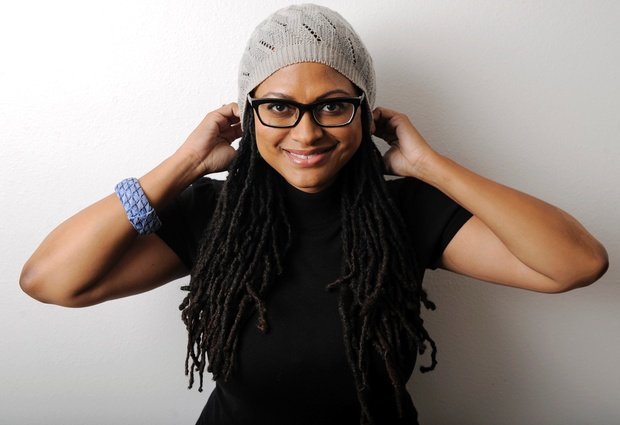 “There are some black filmmakers that don’t want to be called a black filmmaker because they just want to be called a filmmaker, some women who want to be called a filmmaker, not a woman filmmaker. I am a black woman filmmaker. That is my identity, that’s the gaze through which I make my work. It doesn’t mean that only black women can watch my work. Folks are grown. We’re all adults. We should all be at a point where you can listen to stories from all kinds of minds and all kinds of folk. I believe in the good of people. I don’t believe I’m limiting myself by calling myself what I am.”
Selma is in theaters now:
Source: KCRW’s The Business
 We Minored in Film
Reblogged this on For My Info.